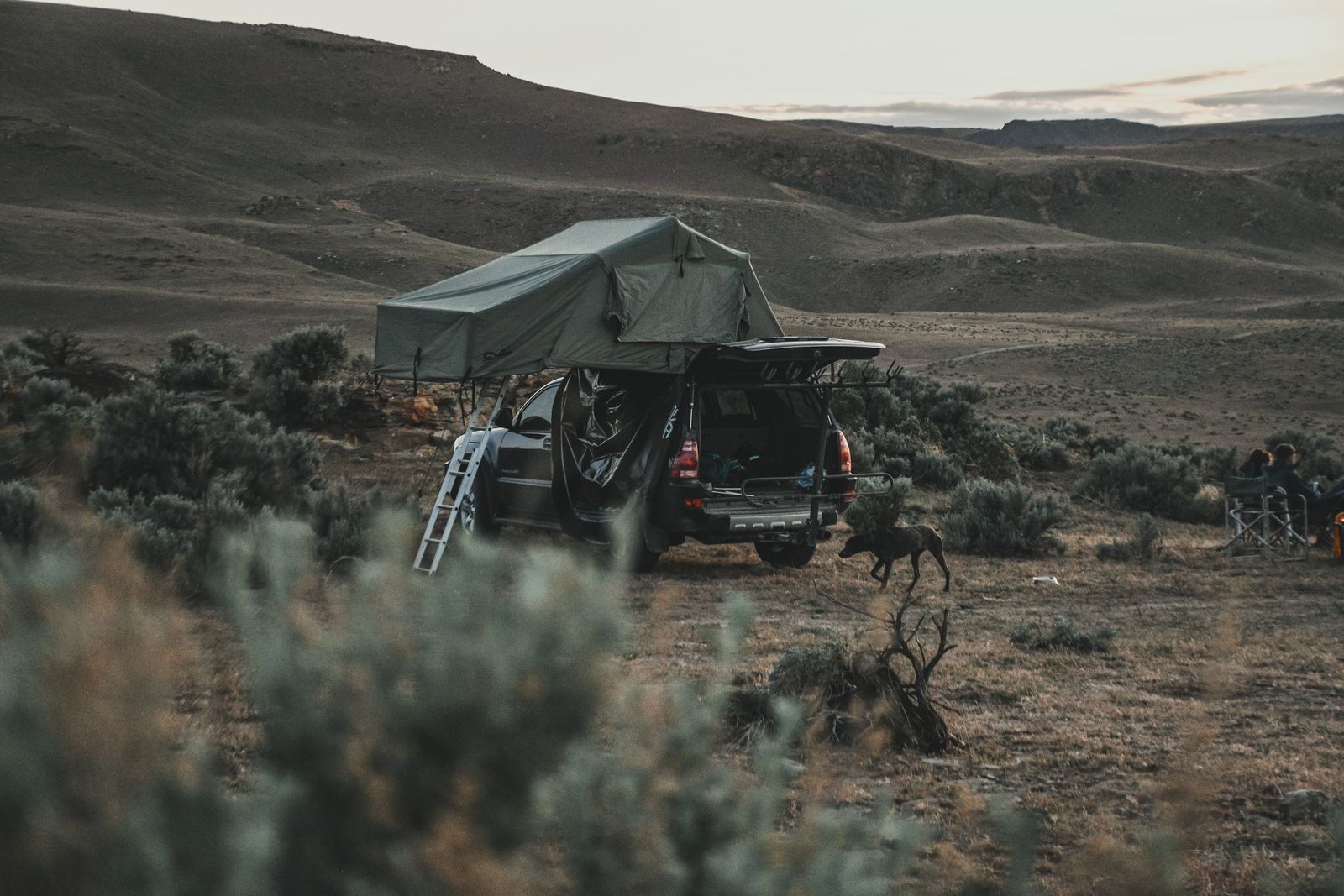
How we chose these roof top tents
This is an editorial comparison, not a hands-on product test. We rank products by how their documented features line up with common dog-camping needs.
Transparency note: howtocampout does not claim hands-on mileage, trip duration, named test dogs, measured ladder angles or other first-person test results unless that work has actually been performed and documented.
Manufacturer statements such as waterproof ratings, mattress thickness, setup time and product dimensions are identified as manufacturer/retailer specifications rather than our own measurements.
1. Access
We look for telescopic ladders, multiple access points, stair-style accessories and annex options. We do not assume a human ladder is automatically safe for every dog.
2. Sleeping space
More usable floor area generally makes it easier to accommodate a dog, but a manufacturer's “person” rating is not converted into a dog-weight rating.
3. Ventilation & cleanup
Mesh openings, windows, hard-shell surfaces and removable/protective bedding can matter when camping with fur, wet paws and warm-weather conditions.
4. Documentation & support
Established manufacturer, distributor and retailer pages with published specifications and clearer support information are weighted most heavily.
7 roof top tents for dog owners at a glance
“Best for” labels below are editorial use-case recommendations based on documented features, not field-test awards.
| # | Model / Listing | Type | Editorial use case | Dog-relevant documented feature | Evidence confidence |
|---|---|---|---|---|---|
| 1 | SAN HIMA CapeTop + Annex | Fold-out RTT + ground annex | Best for dogs staying ground-level | SAN HIMA explicitly lists pets as a use for the 7.67 m² protected annex space | Manufacturer + Amazon |
| 2 | iKamper Skycamp 4.0 Trio + HC Steps | Expandable hardshell | Best documented access system | HC Steps convert the compatible ladder to staircase-style steps and iKamper explicitly mentions pets | Manufacturer + AU distributor |
| 3 | SAN HIMA Jervis | ABS hard shell | Best all-round hard shell | 211 × 156 cm listed interior footprint, telescopic ladder, ventilation and tri-colour light | Manufacturer + Amazon |
| 4 | SAN HIMA Kalbarri Lite Gen 2 | Low-profile aluminium hardshell | Best low-profile option | 60.5 kg listed weight, 11.6 cm packed profile, 6 cm self-inflating mattress and 207 × 117 cm interior | Manufacturer + Amazon |
| 5 | Kings Grand Tourer MKIII | Aluminium rooftop tent | Best AU retailer-support pick | 75 mm mattress, 30-second setup claim and 150 kg ladder rating published by 4WD Supacentre | Manufacturer-retailer + Amazon |
| 6 | 23ZERO Dakota Super Lite | Lightweight soft-shell RTT | Best lightweight Australian option | 41 kg tent, 2300 mm adjustable ladder, 60 mm mattress and full-length side windows | Manufacturer |
| 7 | DARCHE Basecamp 2200 + optional annex | Large soft-shell RTT | Best large annex-ready AU option | 65 mm mattress, 2.3 m telescopic ladder, broad ventilation and a compatible ground-level annex | Manufacturer |
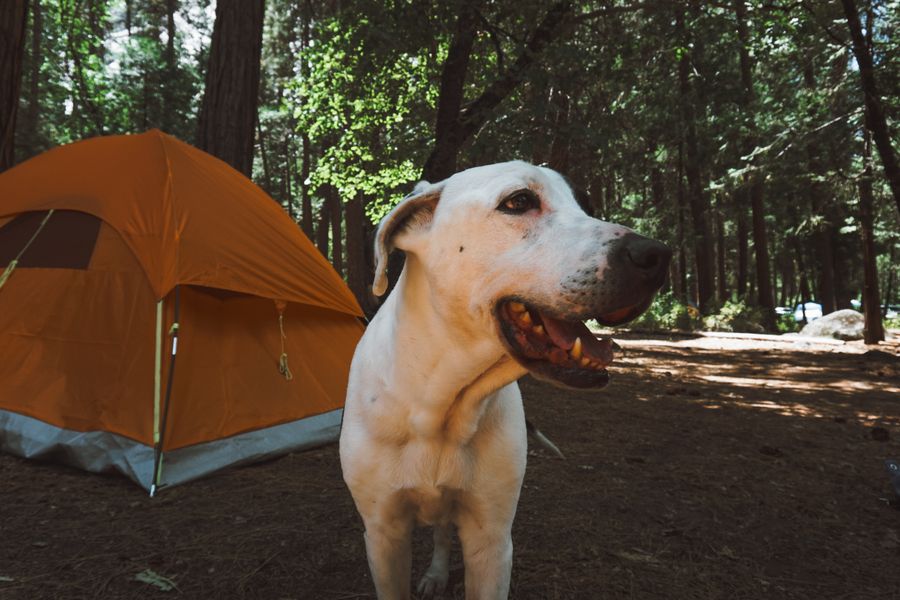
SAN HIMA CapeTop with Annex
The CapeTop moves to the top of this list because its dog relevance is direct rather than inferred. SAN HIMA sells a matching annex that creates a protected room at ground level and explicitly lists pets among the possible uses.
For many senior, heavy, short-legged or ladder-averse dogs, the best rooftop-tent solution is one that does not require the dog to use the rooftop sleeping platform at all. The annex gives the owner an RTT while allowing the dog to stay in a connected ground-level shelter.
Documented strengths
- Manufacturer explicitly identifies pets as an annex use case
- Ground-level option removes ladder access from the dog's sleeping routine
- Large protected annex area can separate dog gear from rooftop bedding
Limitations
- Annex adds setup steps and campsite footprint
- Weather ratings are manufacturer claims, not our independent test results
- Vehicle and rack compatibility still needs separate verification
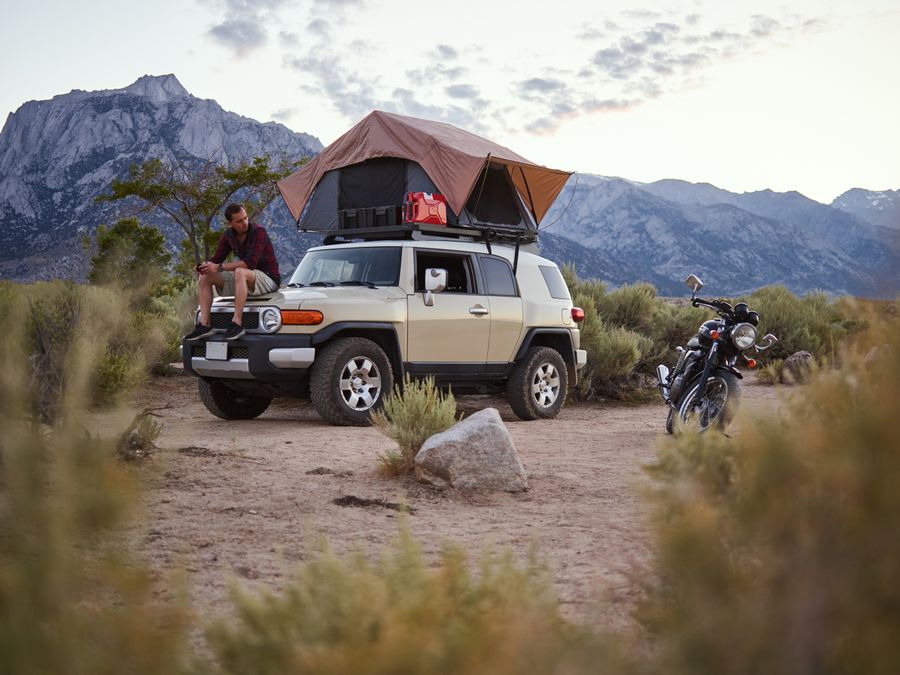
iKamper Skycamp 4.0 Trio + HC Steps
If you specifically want the dog sleeping on the rooftop platform, iKamper provides unusually clear documentation around access. Its HC Steps convert a compatible ladder into staircase-style steps, and the company explicitly discusses kids and pets in the product description and publishes separate guidance on getting dogs into an RTT.
The point is not that HC Steps make every dog safe at height. It is that iKamper has a purpose-built, manufacturer-documented access accessory that explicitly includes pets in its use case. The company also offers an Annex Plus that it describes as suitable for creating a sheltered place for a dog.
Documented strengths
- HC Steps explicitly designed around more secure footing for kids and pets
- Large 171 × 210 cm sleeping area in the Trio
- Current 4.0 platform has integrated lighting and larger openings
Limitations
- Premium price tier
- HC Steps are an additional accessory
- Dog suitability still depends on the individual dog and installed ladder geometry
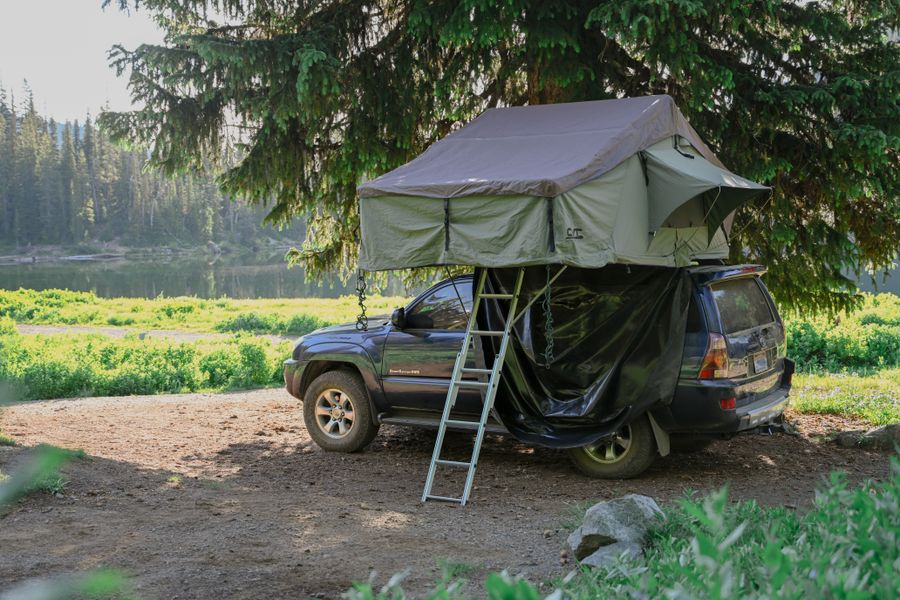
SAN HIMA Jervis Rooftop Tent
The Jervis remains a strong pick because SAN HIMA publishes a detailed specification set and the design combines a broad listed sleeping footprint, telescopic ladder, multiple ventilation openings, anti-condensation mat and integrated lighting.
The useful dog-owner features are space, airflow, lighting and relatively easy-clean hard-shell construction. The 150 kg ladder rating is a ladder specification, not a dog-capacity recommendation, so do not treat it as proof that a particular dog should climb.
Documented strengths
- Detailed manufacturer dimensions and material specifications
- Integrated lighting helps manage nighttime entry and exit
- Hard-shell exterior is straightforward to wipe clean
Limitations
- No dog-specific stair accessory supplied
- Waterproof and setup claims are manufacturer statements
- Vehicle/rack suitability must be checked separately

SAN HIMA Kalbarri Lite Gen 2
The Kalbarri Lite Gen 2 is the low-profile choice in the list. Its strongest evidence-backed arguments are vehicle-side: a 60.5 kg listed weight and an 11.6 cm packed height. For dog owners, the more relevant interior features are the 207 × 117 cm listed floor, ventilation and thicker self-inflating mattress.
A slim packed tent can help with vehicle clearance and roof load planning. It does not automatically create a gentler dog climb once deployed. Final ladder angle depends on the vehicle, rack height, extension and ground position.
Kings Grand Tourer MKIII Aluminium Rooftop Tent
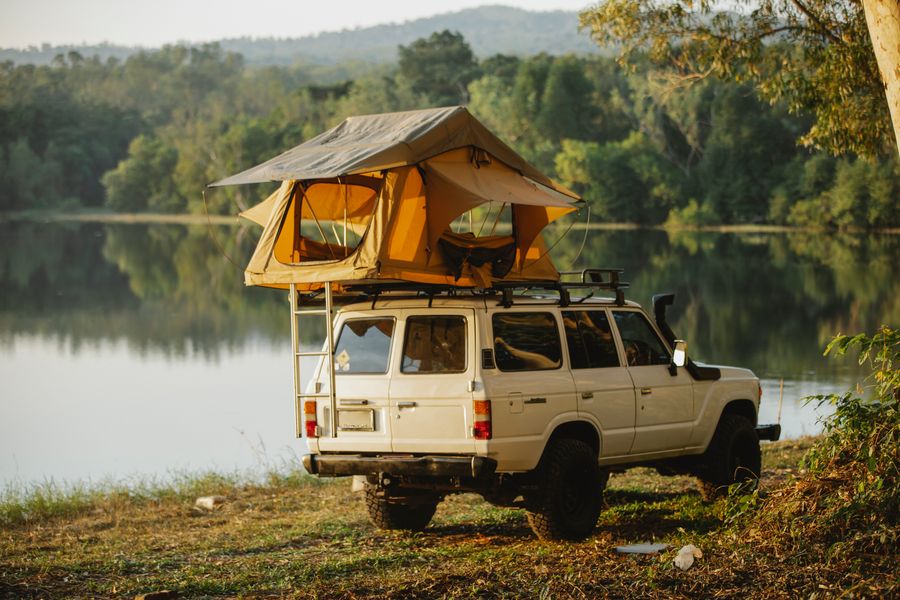
The Grand Tourer MKIII stays in the list because 4WD Supacentre provides clear current product information, Australian retail support and a feature set that matters when sharing an RTT with a dog: a 75 mm high-density foam mattress, large sleeping area and a published ladder load rating.
The thick mattress and broad sleeping area are the relevant advantages. The 150 kg ladder rating describes the hardware; it is not a recommendation for a dog of any particular size to climb the ladder.
Documented strengths
- 75 mm mattress
- Published 30-second setup claim
- 2-year warranty and broad Australian retailer presence
Limitations
- No manufacturer claim that the ladder is dog-specific
- Setup and water-ingress performance statements are seller/manufacturer claims
- Check current total installed weight and rack fit before purchase
23ZERO Dakota Super Lite Roof Top Tent
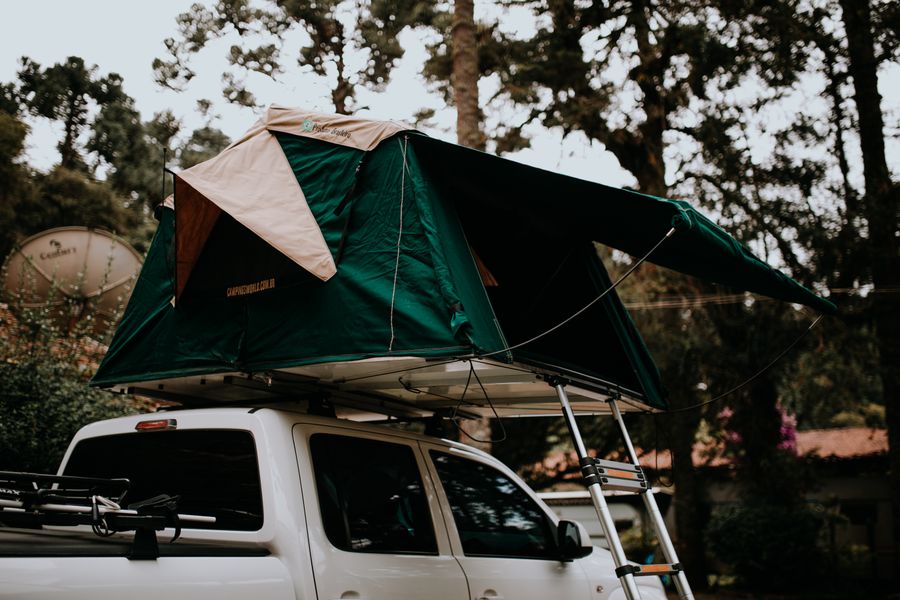
At a manufacturer-listed 41 kg, the Dakota Super Lite is materially lighter than the hardshells above. That makes it useful for buyers working with tighter roof-load budgets, while its full-length side windows, 60 mm mattress and long adjustable ladder give it a credible dog-owner use case without inventing pet-specific claims.
The strongest reasons are not “dog safety” claims. They are low tent weight, ventilation and a 2300 × 1200 mm sleeping platform. 23ZERO also has a separate dog-swag line, but that does not make the Dakota itself a pet-specific tent.
DARCHE Basecamp 2200 Roof Top Tent + Optional Annex
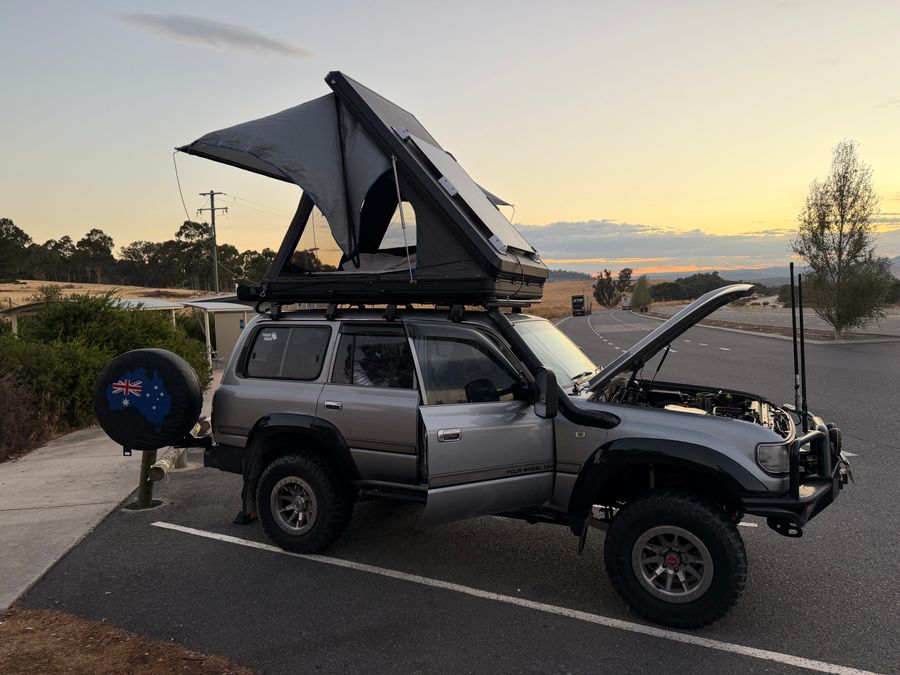
The Basecamp 2200 is included because DARCHE provides a clear manufacturer support path and a compatible annex ecosystem. It is particularly relevant when you want a large rooftop sleeping area but also value the option to create sheltered space below the tent.
DARCHE describes the annex as additional shelter and storage rather than specifically as a pet product. Using that ground-level room for a dog is therefore our editorial use-case suggestion, not a manufacturer “designed for pets” claim.
How to choose a roof top tent when you camp with a dog
Focus on the dog, the vehicle and the access system together. A tent can be excellent for people and still be a poor match for a particular dog.
1. Decide first whether your dog should sleep on the roof at all
Small, agile and confident dogs may adapt well to assisted rooftop access. Older dogs, dogs with mobility problems, very heavy dogs and short-legged breeds may be better served by a ground-level annex or separate dog shelter. Do not buy the tent first and solve access later.
2. Treat ladder geometry as installation-specific
The earlier article assigned specific dog-friendly ladder angles without measurements. That has been removed. Vehicle roof height, rack height, ladder extension and ground position all affect the final angle. Some manufacturers provide pet-specific guidance for their own systems; follow the instructions for the exact ladder you own.
3. Prefer documented access accessories over improvised elevated ramps
iKamper, for example, sells HC Steps that convert its compatible RTT ladder into staircase-style steps and explicitly mentions pets as a use case. The current Skycamp 4.0 Trio remains compatible with HC Steps, and iKamper also offers a compatible Annex Plus. Purpose-built accessories are easier to evaluate than an improvised ramp attached several feet above the ground.
4. Floor area matters more than a “sleeps X” label
A “three-person” or “four-person” rating is a human sleeping-capacity description, not a dog-capacity specification. Compare the actual open sleeping dimensions and think about where your dog lies, where humans need to move, and how close the dog will be to the entrance.
5. Check vehicle and rack limits from the actual manufacturers
Do not use a generic article rule such as “under 60 kg static load.” Roof systems involve vehicle roof limits, rack limits, tent weight and mounting instructions. Check the vehicle manual, rack manufacturer and tent manufacturer for the exact setup.
6. Ventilation and cleanup are practical dog features
Mesh windows and multiple openings can improve airflow. A protective mattress layer and a separate washable dog bed can make cleaning easier. Hard shells can also be simpler to wipe externally than fabric transit covers, though the sleeping area itself will still need routine cleaning.
Dog-owner pre-purchase checklist
Roof top tent ladders, stairs, ramps and annexes
There is no universal access method for every dog. These are the safer categories to compare.
Stair-style ladder accessories
iKamper's HC Steps are designed to convert a compatible traditional RTT ladder into staircase-style steps. iKamper explicitly lists pets among the use cases.
Manufacturer-specific ladder guidance
iKamper also publishes a guide on getting dogs into a roof top tent and discusses ladder positioning, HC Steps and alternative access approaches for its own systems.
Ground-level annex
If rooftop access is the problem, an annex can remove that requirement. SAN HIMA's CapeTop annex documentation explicitly lists pets as one use for the protected extra space.
Separate dog shelter
23ZERO sells the Woof Den, a dedicated ground-level camping kennel with mesh ventilation and a welded PVC floor. This is another option for owners who do not want a dog sleeping in the RTT.
DIY dog ramp: use caution
A homemade elevated ramp can fail if the attachment, angle, surface or structure is wrong. This guide no longer gives unsupported “12 mm plywood / 30°” build instructions as though they are universally safe.
Train on low-risk setups first
Do not make the dog's first exposure a full-height vehicle climb. Follow the accessory or tent manufacturer's instructions and stop if the dog is fearful or physically uncomfortable.
What Australian dog owners should prioritise
Heat, long-distance travel, dust and access to local support can all affect the choice.
Australian documentation and support are part of the ranking
SAN HIMA publishes local product specifications, 4WD Supacentre provides Australian retail support for Kings, and both 23ZERO and DARCHE maintain Australian product, warranty and accessory ecosystems. iKamper also has an Australian distributor presence. None of that guarantees a tent will suit your dog, but it gives buyers clearer specifications, compatible accessories and a defined support path.
Do not turn manufacturer claims into independent test results
If a product page says “5,000 mm waterproof,” the article should say “manufacturer-rated to 5,000 mm” rather than “we stayed dry in 12 heavy rain nights.” If a retailer says “30-second setup,” attribute it to the retailer rather than presenting it as our timed result.
Recheck product availability
Manufacturer, distributor, retailer and Amazon AU stock can change. The links in this article were checked on 13 August 2026, but a live product page is not the same thing as guaranteed stock. Avoid phrases such as “in stock now” unless you have a system that updates them dynamically.
Roof top tents and dogs: practical answers
What is the best roof top tent for dog owners?
There is no single best model for every dog. In this comparison, the SAN HIMA CapeTop + Annex ranks first when the dog should remain at ground level because the manufacturer explicitly lists pets as an annex use case. If the dog is physically suited to rooftop access, the iKamper Skycamp 4.0 Trio + HC Steps has the strongest documented pet-access system because the HC Steps convert its compatible ladder into staircase-style footing.
Can dogs go in roof top tents?
Yes, many dogs camp in rooftop tents, but access is the limiting factor. Some manufacturers publish pet-access guidance or sell stair-style accessories. A dog that is fearful, elderly, very heavy, short-legged or mobility-limited may be better in an annex or ground-level shelter.
Is a rooftop tent ladder or ramp better for a dog?
It depends on the dog and the exact tent system. Stair-style accessories can make a compatible ladder more familiar underfoot. A purpose-built ramp may work for some installations, but it must be securely supported and compatible with the vehicle and tent. Avoid assuming a homemade ramp is safe just because the dimensions look reasonable.
Are low-profile rooftop tents better for nervous dogs?
Not automatically. A low packed profile can reduce vehicle clearance, but the dog experiences the deployed access geometry. Ladder angle depends on mounting height, ladder extension and placement, so it should be checked on the actual vehicle rather than inferred from the tent's closed height.
What are the downsides of rooftop tents for dog owners?
The biggest dog-specific issue is access. You also need to consider the vehicle and rack load limits, the inconvenience of getting a dog down for nighttime toilet breaks, limited floor space in smaller tents, heat management, cleaning wet paws and the need to pack the tent before driving away.
Should a senior dog sleep in a roof top tent?
Only if access is appropriate for that individual dog and its physical condition. For many senior dogs, keeping the dog at ground level in a protected annex or separate shelter is simpler than repeatedly climbing or being lifted to roof height.
Can I leave a dog inside a rooftop tent while the vehicle is moving?
No. A roof top tent is a stationary camping shelter, not a transport compartment. The tent must be packed for travel and the dog should travel in an appropriate location inside the vehicle or another approved transport setup.
Are the products on this page personally tested by howtocampout?
No. This version of the guide is a research-based comparison. Manufacturer and retailer specifications are attributed as such, and editorial recommendations are based on documented features rather than invented first-person testing.
Our recommendation
Choose the dog's access strategy before choosing the tent
For dogs that should stay at ground level, the SAN HIMA CapeTop + Annex is our strongest topic-specific pick because the manufacturer explicitly identifies pets as an annex use case.
For a physically capable dog that will share the rooftop sleeping platform, the iKamper Skycamp 4.0 Trio + HC Steps has the strongest documented access ecosystem in this comparison. HC Steps are designed to turn the compatible ladder into staircase-style footing, and iKamper explicitly discusses pets in its access guidance.
The Jervis is the strongest simpler hard-shell option; the Kalbarri Lite Gen 2 is the slimline choice; Kings provides a well-documented Australian retail option; the 23ZERO Dakota Super Lite is the lightweight pick; and the DARCHE Basecamp 2200 is the large annex-ready Australian soft-shell choice.