“Everything’s great, except the crowds — so, so many crowds.”
Getting around Beijing by subway is remarkably easy, especially for foreign visitors. The base fare is ¥3 for up to 6 km, increasing with distance — a typical ride costs ¥3–6 RMB. Tap a contactless Visa or Mastercard directly at the turnstile and you’re set; the Alipay or WeChat transit-code mini-program works just as well after a quick one-time setup. The one thing worth planning around: several major sites require advance booking through WeChat, and tickets go fast — set an alarm and be online right when the booking window opens.
Day 1: Central Axis — Tiananmen to Jingshan

Start at the heart of the city. From Guomao, take Subway Line 1 to Tiananmen East station — the square is bigger than photos make it look, and worth a slow lap before heading in. Walk through the Tiananmen Gate Tower into the Forbidden City next.
This is the one booking to take seriously. Reserve through the Palace Museum’s official mini-program exactly seven days ahead — the window opens at 8:00 PM sharp, and tickets run ¥60 per person in high season (April–October). Select Passport as the ID type. If you miss the window, the General Service Window at the Meridian Gate is a real backup, but don’t count on it during peak months — it’s confirmed to work, though lines can run long.
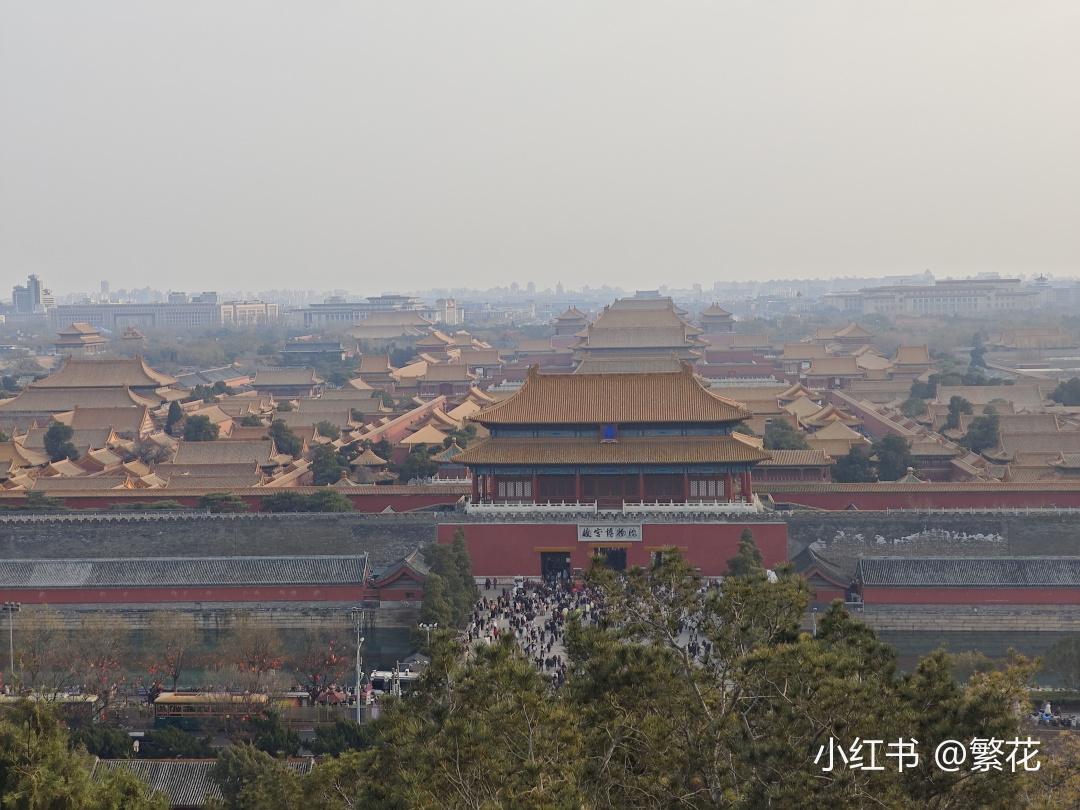
By evening, exit through Shenwumen and cross into Jingshan Park — ¥2 entry, plus ¥10 to climb Wanchun Pavilion, no booking needed. Time it for sunset if you can; the view over the Forbidden City from the top is the best free thing you’ll do all trip.
“Walking these stone paths worn smooth by time, the red walls still stand and the halls remain unchanged. What’s different is you — what remains is six hundred years of quiet, settled weight.”
“Looking down from Wanchun Pavilion, the whole Forbidden City spreads out before you — red walls and yellow tiles stretching layer after layer.”
For dinner, Dahaiwan is a few minutes’ walk from Shenwumen Gate. Order the signature old-Beijing zhajiangmian (about ¥32/bowl) — the noodles and sauce arrive separately, and it’s worth mixing in less sauce than you think you need at first. The roast duck (about ¥128/half) is the better order of the two.
“My favorite was the roast duck. The skin was glossy and crisp, the meat tender without being dry.”
Day 2: Hutongs — Nanluoguxiang & Shichahai

This is a slower day by design. Take Subway Line 8 to Nanluoguxiang station and wander the maze of hutongs and courtyard homes without much of a plan — it’s the kind of neighborhood that rewards getting a little lost. Walk to Shichahai by afternoon; both areas are free, open public space, no ticket needed anywhere.
Renting a rowboat on Houhai is popular, but it’s entirely optional — the lakeshore walk past the willow trees and bar street is enough on its own.
“Grey brick and tile hide the gentleness of old Beijing; the winding hutongs are full of everyday warmth.”
Treat this as a grazing day rather than a sit-down-meal day. Chatang Li does chatang millet porridge (about ¥20) and mendingrou bing (about ¥6 each); Kaorou Liu has old-Beijing-style griddle-grilled lamb for about ¥96 per person; and Wu Yutai Tea House — worth returning to more than once — serves jasmine tea and matcha ice cream for around ¥10.
Day 3: Imperial Gardens — Summer Palace & Old Summer Palace

Take Subway Line 4 directly to Beigongmen station for the Summer Palace — the largest surviving imperial garden in China, and worth budgeting more time here than you’d expect. Gate entry alone is ¥30; the high-season combo ticket, which covers the gardens within the garden, runs ¥60. Book 1–7 days ahead via the Beijing Parks or Summer Palace mini-program.
Stay on Line 4 to Yuanmingyuan station for the Old Summer Palace — ¥10 gate entry, ¥25 combo. If the Summer Palace is polish and grandeur, this is its ruined counterpart, and seeing both in one afternoon makes for a sharper contrast than either alone.
“The Summer Palace deserves five stars — China’s best-preserved Qing imperial garden and a UNESCO World Heritage Site.”
For food, head to the Longfor Xingyuehui mall near Xiyuan subway station. Fangzhuanchang No.69 Zhajiangmian offers free refills on both noodles and sauce, and Sanyuan Meiyuan’s double-skin milk pudding (about ¥20/person) is a good way to close out the afternoon.
Day 4: The Great Wall — Badaling

“He who has never been to the Great Wall is not a true hero.” The best way there is by high-speed rail — from Guomao, take the subway to Beijing North or Qinghe Railway Station, then a high-speed train to Badaling Great Wall Station.
Important: there’s no on-site ticket window here. Booking has to happen online in advance through the official Badaling Great Wall WeChat account — admission runs ¥40 per person in high season. Once inside, climb from North Tower 1 through to North Tower 8 and back; it’s confirmed as the most scenic stretch, and pushing further isn’t necessary unless you’re set on it.
The Badaling Hotel is worth the stop for dinner — it’s hosted foreign heads of state, and the Qi Family Army fire spoon dish alone justifies the detour. The rooftop garden on the third floor overlooking the Wall is easy to miss and shouldn’t be.
“Came down from the wall around 3 PM and went straight up to the rooftop garden terrace — the view is genuinely unbeatable.”
Day 5: Olympic Green — Bird’s Nest & Water Cube

Plan this as a lighter day after the Great Wall. From Guomao, take Line 10, transfer to Line 8, and get off at Olympic Green station. The exteriors of both the Bird’s Nest and the Water Cube are free to view — the interior (usually ¥50–100) is skippable for most visitors, though the Water Cube’s bubble-textured shell is genuinely worth seeing after dark if photography is a priority.
For dinner, Beiping Shengshi Roast Duck nearby does a Shengshi Peony roast duck (about ¥158/whole) — solid, though Dahaiwan from Day 1 is the better version if you only have room for one.
Day 6: Temple of Heaven & Qianmen

Take Line 5 to Tiantandongmen station. The ¥34 combo ticket — covering the Hall of Prayer for Good Harvests, the Echo Wall, and the Circular Mound Altar — is worth paying over the basic ¥15 gate entry; it opens up most of what makes the park worth visiting. Book through the Beijing Parks mini-program.
In the afternoon, exit through the north gate toward Qianmen Street, one of the strongest food streets on this itinerary. Try the luzhu huoshao at Menkuang Hutong Luzhu (about ¥32–45) — a bold, organ-meat dish; ask for less garlic if it’s your first time. Jinfang Snacks down the street is a gentler counterpoint, with miancha, douzhi, and cream-fried cakes.
“The broth is amber, savory with soy and fermented black bean — clean, without coating your mouth, and you can taste the bone broth underneath.”
Day 7: Guomao & Farewell to the City

Keep the last day light — some souvenir shopping around Guomao, then Line 10 to the Airport Express when it’s time to head out. For a final dinner with a view, NinaNina Rooftop Italian offers 360-degree CBD views; Blue Frog down the road is the better call if you’d rather keep it casual, and works well for a last round of drinks either way.
Before You Land: A Few Last Notes
Palace Museum tickets are released at 8:00 PM sharp — being online and ready matters more than anything else on this list, since the window closes fast. The Beijing Parks mini-program covers most city-run parks, including the Summer Palace and Temple of Heaven, so it’s worth setting up before you land rather than mid-trip.
On food: zhajiangmian sauce runs salty, so mix in half first and add more to taste; luzhu and stir-fried liver are both bold, organ-meat dishes, and it’s completely normal to ask for less garlic as a first-timer; and portions in northern China run generous, so splitting snacks between two people is the better way to sample more of the menu.
Bring a contactless card or set up Alipay or WeChat Pay before you travel — either covers you for the whole trip. Carry your physical passport every day; every booked attraction checks it, no exceptions.